Dubai Ranks 17th and Abu Dhabi 33rd in JLL's 2026 Transparency Index
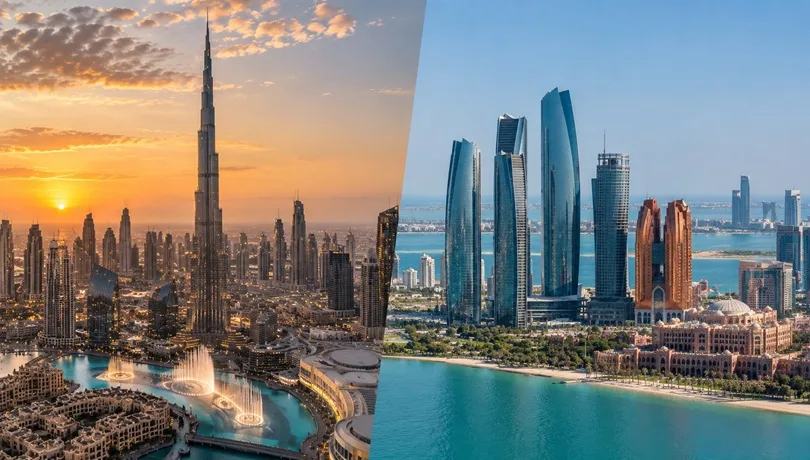
Dubai ranked 17th globally and Abu Dhabi 33rd in JLL's 2026 Global Real Estate Transparency Index, reflecting significant progress in the two UAE real estate markets' data availability, regulatory frameworks and conditions for investment decision-making.
Dubai recorded a score of 2.05, placing it in the Transparent tier, while Abu Dhabi scored 2.42 to rank 33rd worldwide.
The results mark a substantial improvement from the 2024 index, when Dubai ranked 28th globally and Abu Dhabi placed 41st. Dubai has therefore advanced 11 places over two years, while Abu Dhabi has climbed eight places. In the 2024 edition, Dubai was the only real estate market in the Middle East and North Africa classified in the Transparent tier.
Dubai ranks ahead of Switzerland and Italy
Dubai ranked immediately after Spain, which placed 16th, and ahead of several major global real estate markets including Switzerland, Poland, Italy, Denmark, Norway, South Korea, Austria and China.
The United Kingdom topped the 2026 Global Real Estate Transparency Index with a score of 1.24, followed by France at 1.27. Australia, the United States, the Netherlands, Canada, New Zealand, Ireland, Sweden and Germany completed the top 10.
Singapore ranked 13th, followed by Hong Kong, Finland and Spain, before Dubai in 17th place.
Abu Dhabi ranked ahead of Thailand, Saudi Arabia, Malaysia, Romania, Greece, Brazil, Mexico and Turkey.
JLL assesses Dubai and Abu Dhabi as separate real estate markets within the UAE, while some other entries in the index represent entire countries. The more accurate description of the result is therefore that Dubai is the world's 17th most transparent real estate market, rather than the 17th most transparent city.
Dubai and Abu Dhabi among the world's most improved markets
The UAE's progress extended beyond the rankings of Dubai and Abu Dhabi, with JLL identifying both markets among those recording the greatest improvements in transparency between 2024 and 2026.
JLL's chart of the most improved markets places Abu Dhabi and Dubai among the leading markets by improvement in transparency scores, alongside Saudi Arabia, India, Vietnam, South Korea, Qatar, Australia, Thailand and Poland.
The report said Gulf markets have continued to make progress in real estate transparency despite geopolitical disruption in the region. Dubai, Abu Dhabi, Saudi Arabia and Qatar were among the top improvers, while the region has also recorded substantial progress over the past decade.
JLL attributed the gains to a long-term government focus on improving transparency and institutionalizing markets alongside economic diversification strategies.
How JLL measures real estate transparency
JLL's index does not measure property sales volumes or price growth. Instead, it assesses how easily investors, developers, lenders and businesses can access the information needed to understand markets and make decisions, as well as the quality of regulatory and legal frameworks and the transparency of transaction processes.
The index is based on six key areas: investment performance measurement; market fundamentals; governance of listed vehicles; the regulatory and legal environment; transaction process transparency; and sustainability.
The 2024 edition of the index used 256 individual indicators to assess market transparency across these six areas.
Scores range from 1 to 5, with a lower score indicating a higher level of transparency. A score of 1 represents complete real estate transparency, while a score of 5 indicates total opacity.
Real estate data supports Dubai's progress
The 2026 report highlighted the role of real estate service digitization, regulatory development and the expansion of available data in the progress achieved by Dubai and Abu Dhabi.
It noted that Dubai Land Department has become a leader in providing real-time, publicly accessible real estate data, strengthening the ability of investors, businesses and service providers to analyze market trends and make informed decisions.
The report also identified several developments that have strengthened transparency in Dubai's market, including enhanced operating cost and service charge transparency through the Mollak system for invoice reporting, as well as the expansion of blockchain-based title registration to streamline real estate transactions.
JLL described Dubai Land Department's Dubai REST program as a world-leading example of providing detailed, disaggregated real estate information that can be used by the public and private sectors for analysis and decision-making.
Technology and AI support market transparency
JLL places technology at the center of the transformation taking place in real estate transparency, as land registry and planning records become increasingly digitized and transaction, pricing and asset data becomes more accessible.
The report said global transparency improvements over the past two years have been supported by the digitization of land registries and planning services, broader data availability across emerging real estate sectors, and stronger disclosure relating to building and energy performance.
In its 2024 edition, JLL linked the UAE's progress to expanded digital capabilities, improvements in anti-money laundering systems and beneficial ownership data, greater market data availability, and property technology initiatives.
In Abu Dhabi, the DARI platform, wider deployment of real estate technology and artificial intelligence, and digital services have supported the development of databases covering sales, rents, projects and transactions.
More than 98% of real estate capital targets transparent markets
Dubai and Abu Dhabi's advance carries greater investment significance given the relationship identified by JLL between market transparency and the ability to attract capital.
According to JLL, markets classified as Highly Transparent and Transparent together attract more than 98% of real estate capital. Highly Transparent markets account for around 81% of capital, while Transparent markets account for 17.5%.
Transaction volumes in the Highly Transparent group have risen by 64% since the previous survey two years ago, outperforming the recovery across the rest of the world by 20 percentage points.
The 13 countries in the Highly Transparent group account for 56% of total income-producing real estate globally and more than 80% of direct real estate investment, underlining the growing relationship between transparency, liquidity and the ability to attract institutional capital.
Two-thirds of global real estate markets improve transparency
The report found that around two-thirds of the markets covered by the index improved their transparency levels over the past two years, although the pace of progress varied significantly across countries and regions.
This comes as data quality, speed of access and regulatory clarity become increasingly important to investors, alongside the wider use of technology and artificial intelligence in asset valuation, market analysis and real estate portfolio management.
At the same time, JLL said the gap between the most transparent and least transparent markets is continuing to widen, giving markets that strengthen their regulatory and digital systems a greater competitive advantage in attracting international investors and institutional capital.
What Dubai and Abu Dhabi's progress means for investors
A higher ranking for Dubai and Abu Dhabi does not necessarily indicate rising property prices or guarantee stronger returns. It points instead to a more developed institutional and information environment, reducing the level of uncertainty investors face when assessing assets and executing transactions.
These factors are particularly important for international capital and institutional investors, whose decisions depend on the quality of data on prices, rents, transactions and supply, as well as the clarity of laws, ownership rights, registration procedures and disclosure requirements.
Dubai and Abu Dhabi's progress comes as other recent JLL research indicates that the UAE residential market is entering a period of more moderate price and rental growth as supply increases, making data quality and market transparency increasingly important when investors assess opportunities and risks.
Related Articles