Dubai Mortgage Transactions Rise 12% to $36.6bn in First 8 Months of 2026
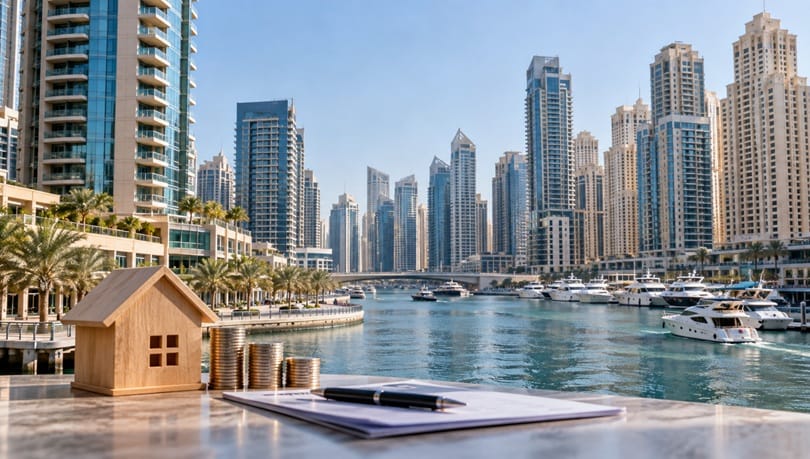
The value of mortgage transactions in Dubai rose by nearly 12% in the first eight months of 2026 to approximately $36.6 billion (AED 134.34 billion), up from $32.7 billion (AED 120 billion) in the same period last year, despite a decline in the number of transactions.
The figures point to a shift toward larger property deals, with the average value of mortgage transactions rising sharply as financing becomes increasingly concentrated in higher-priced properties.
According to data published by Emarat Al Youm, the number of mortgage transactions in Dubai fell by 10% to around 30,600 between January and the end of August 2026, from approximately 34,100 in the same period of 2025.
Calculations by Al Masdar Al Aqaari based on the published figures show that the average mortgage transaction value increased by about 25% year on year, from approximately $958,000 (AED 3.52 million) in the first eight months of 2025 to around $1.20 million (AED 4.39 million) in the same period this year.
The divergence between rising mortgage values and falling transaction volumes suggests that growth was driven by larger deals rather than an increase in borrowing activity, according to Al Masdar Al Aqaari's analysis of the published data.
Dubai mortgages shift toward higher-value property deals
Two real estate experts who spoke to Emarat Al Youm attributed the increase in mortgage values to several factors, including sustained demand for ready properties, rising property prices and the resulting increase in borrowing requirements, as well as competition among banks and the availability of financing for qualified buyers.
Mohannad Alwadiya, CEO of Harbor Real Estate, said the rise in mortgage values alongside lower transaction volumes reflects a clear increase in the average size of financed deals, in line with higher property prices and greater use of borrowing for more expensive purchases.
He said a growing number of buyers now view mortgages as a tool for managing liquidity rather than simply as an alternative when cash is unavailable. Buyers with sufficient funds may choose to finance part of a property purchase while retaining capital for other investment opportunities.
Dubai's property market nevertheless remains heavily cash-driven, particularly in the off-plan segment, while mortgages play a larger role in purchases of ready residential properties, he added.
Cash or mortgage when buying property in Dubai?
The use of bank financing in Dubai varies considerably depending on the type of property and the profile of the buyer.
Alwadiya estimated that mortgages account for around 20% to 30% of property purchases overall, compared with 70% to 80% for cash transactions.
Financing is more widely used for villas and other homes bought by end users, while individual investors, particularly overseas buyers, are more likely to purchase with cash.
Alwadiya said the increase in mortgage activity should not be interpreted as a broader shift in Dubai's property market away from cash purchases. Instead, buyers are becoming more flexible in using debt as part of their liquidity and investment strategies.
An investor with sufficient liquidity, for example, may choose to finance part of a purchase rather than pay the full price upfront, retaining capital for other investments when borrowing costs and potential returns make that approach worthwhile.
Ready properties in Dubai attract stronger mortgage demand
Ready residential properties, particularly villas and townhouses in completed communities, as well as recently handed-over units, are among the segments seeing the strongest use of bank financing.
This partly reflects the profile of buyers in the ready market, where end users purchasing homes for their own occupancy account for a larger share of demand than in some investment-led segments.
Abdullah Abdulqader, co-founder of ProPoint Real Estate, said eight out of every 10 ready-property transactions completed by his company this year were financed by banks, with most of its clients being residents buying homes for their own use.
He said villas and townhouses in completed communities, together with recently handed-over units that have moved from developer payment plans into the mortgageable ready-property market, are among the biggest beneficiaries of bank financing.
Higher Dubai property prices push up mortgage values
Rising property prices are another key factor behind the increase in average mortgage values, as buyers require larger loans to finance properties than they did a year ago.
Abdulqader said the market has seen an increase in financed transactions worth more than $817,000 (AED 3 million).
The median price of villas purchased with mortgages stood at approximately $954,000 (AED 3.5 million), compared with around $327,000 (AED 1.2 million) for apartments.
The median price of a property bought with a mortgage was approximately $436,000 (AED 1.6 million), compared with around $384,000 (AED 1.41 million) for a cash purchase.
The figures indicate that mortgage-backed purchases are concentrated in a higher price bracket than cash transactions, consistent with the sharp rise in the average mortgage transaction value during the first eight months of 2026.
Mortgage financing gains ground in Dubai resale market
Dubai's resale property market is also seeing a gradual increase in the use of bank financing.
According to Abdulqader, the share of resale transactions involving mortgages increased from 22% in 2024 to 25% in 2025 and 28% in 2026.
Refinancing and equity-release transactions involving properties handed over between 2021 and 2023 that have since appreciated in value have also contributed to the increase in overall mortgage transaction values.
Abdulqader expects mortgages to account for around 30% of Dubai resale transactions, with the market continuing to record fewer financed deals but at higher average values.
Dubai mortgage rates remain competitive
Competition among banks is helping support Dubai's mortgage market, with fixed rates ranging from 3.5% to 4.2%, according to Abdulqader.
He said the benchmark interest rate remaining at 3.65% since December, together with competition among banks for qualified borrowers, has helped maintain mortgage activity.
For some residents, the decision to buy is also increasingly influenced by the gap between rental costs and monthly mortgage repayments.
Abdulqader said some residents who had previously rented found that mortgage repayments on a home valued at around $409,000 (AED 1.5 million) had become comparable with rental costs, encouraging some tenants to consider buying instead.
Dubai residents more likely to buy with mortgages
The market trends cited in the report also highlight differences between residents and overseas investors in their use of property financing.
Residents buying homes for their own use are more likely to rely on mortgages, while many overseas investors continue to favor cash or developer payment plans when purchasing off-plan properties.
Abdulqader said the shift toward greater use of financing has become more evident over the past three years, but remains considerably more pronounced among residents than overseas investors.
He added that the loan-to-value ratio stands at around 73%, meaning buyers finance part of the property's value while covering the remainder from their own funds.
Could Dubai mortgage transactions exceed $54bn in 2026?
Abdulqader expects the value of Dubai mortgage transactions to exceed $54.5 billion (AED 200 billion) by the end of 2026, representing annual growth of between 10% and 12%, while the number of transactions is expected to remain below 2025 levels.
That would extend the current trend of fewer but higher-value mortgage transactions.
Alwadiya also expects Dubai's mortgage market to remain active through the end of the year, particularly if borrowing costs remain competitive and banks maintain their current pace of lending.
He said economic growth, population expansion, sustained end-user demand and the delivery of more residential projects could support mortgage activity in the coming period.
The expected wave of project handovers in 2026 and 2027 could also have a significant impact on the financing market, as more properties move from developer-linked payment plans into the ready market, where they become eligible for conventional bank mortgages.
Alwadiya said the increase in mortgage activity does not mean Dubai is becoming a highly leveraged property market. Liquidity remains strong and reliance on debt is relatively low compared with several international markets, he said, with the growth in financing instead reflecting the increasing scale and maturity of Dubai's property market.
Related Articles