Dubai Leads Global Branded Residences Market With 175 Projects
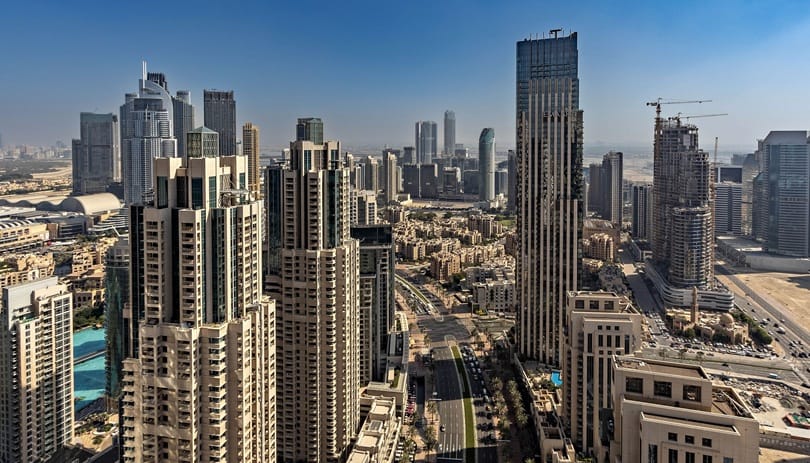
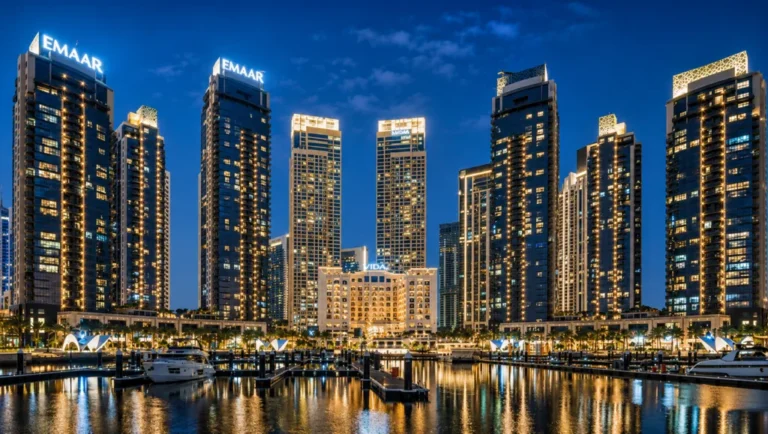
Dubai has cemented its position as the world's largest market for branded residences, with 175 completed and pipeline developments — more than twice the number in Miami — as the Middle East emerges as the biggest growth engine for the global sector, according to Knight Frank.
The property consultancy's Residence Report 2026/27 shows Dubai has 68 operational branded residence schemes and another 107 in the pipeline. Miami ranks second globally with 73 schemes, followed by New York with 38, Phuket Island with 35 and London with 30.
The findings highlight the scale of Dubai's role in a global branded residence market that Knight Frank expects to surpass 1,000 developments in 2026 and expand to nearly 1,800 schemes and more than 300,000 units by 2031.
The Middle East accounts for 20% of all operational and pipeline branded residence projects globally and 25% of the development pipeline, making it the sector's "most significant growth engine", according to the report.
Dubai branded residences outpace global cities
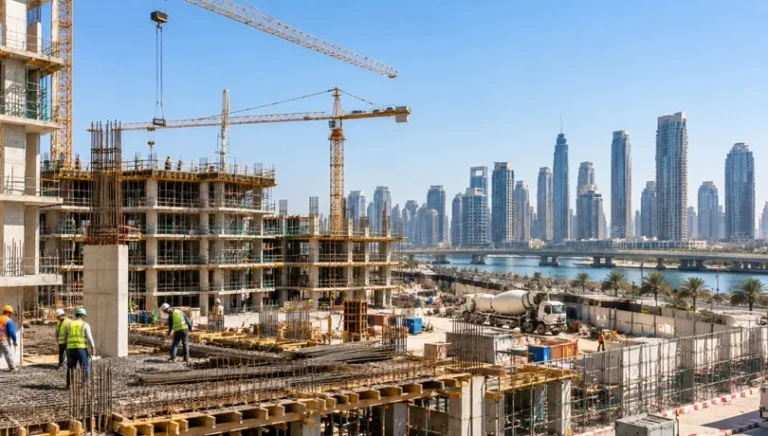
Dubai's 175 branded residence schemes comprise 68 operational developments and 107 projects in the pipeline, with non-hotel brands accounting for 42% of the total. The emirate leads the global ranking by a wide margin, with more than twice as many schemes as Miami, which ranks second with 73 projects, including 31 operational and 42 pipeline developments. New York follows with 38 schemes, ahead of Phuket Island with 35, London with 30 and São Paulo with 29. Abu Dhabi ranks eighth globally with 24 schemes, comprising five operational and 19 pipeline projects, while Al Marjan Island in Ras Al Khaimah ranks ninth with 23 projects, all in the pipeline. Bangkok rounds out the top 10 with 22 schemes, including 14 operational and eight pipeline developments. The report also places the UAE among the world's largest markets for both existing and pipeline branded residences, with the country accounting for 19% of the global development pipeline. Dubai's prominence comes as the sector becomes increasingly diverse: hotel operators account for about 70% of operational schemes worldwide, but their share falls to 60% when pipeline developments are included. Knight Frank expects non-hotel branded residences to increase their share of supply from about 30% in 2025 to almost 40% by 2028, as fashion, automotive and lifestyle brands expand their presence in residential real estate.
Dubai leads global prime property price growth
Dubai also recorded the strongest prime residential price growth among the global markets tracked in the report.
Prime property prices in Dubai increased 180.7% over the five years to the first quarter of 2026, ahead of Tokyo at 126.4%, Manila at 91.8%, Seoul at 71.5% and Miami at 64.3%.
Knight Frank said Dubai's growth "stands in a category of its own" among the strongest-performing prime global city markets over the period.
The emirate also led the markets covered by Knight Frank for the value of super-prime residential transactions.
Sales of homes priced at $10 million or more in Dubai reached an aggregate $10.55 billion in the 12 months to the second quarter of 2026, according to the report's Global Super-Prime Intelligence data. That compares with $6.84 billion in New York, $5.44 billion in Hong Kong and $4.58 billion in Los Angeles.
Abu Dhabi and Ras Al Khaimah emerge as major growth markets
The UAE's branded residence expansion is increasingly extending beyond Dubai.
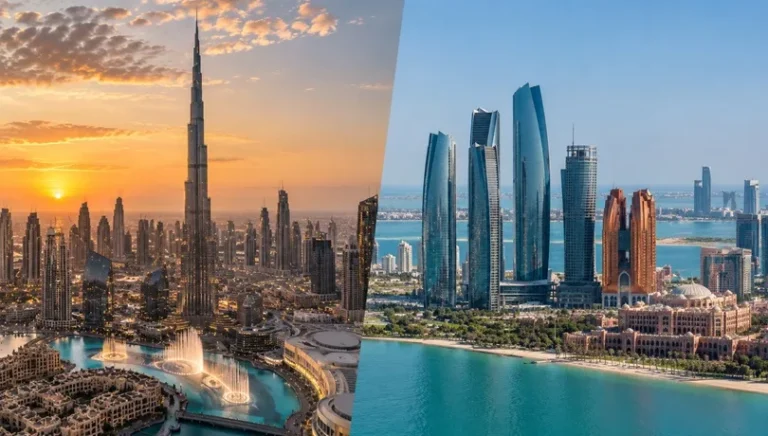
Abu Dhabi ranks eighth globally with 24 schemes, including five operational developments and 19 in the pipeline. Al Marjan Island in Ras Al Khaimah ranks ninth with 23 projects, all of which are in the pipeline, according to Knight Frank.
Al Marjan Island also recorded the strongest growth in international flight volumes among the world's 10 largest branded residence markets, with flights rising 44% between 2023 and 2026. Abu Dhabi recorded a 37% increase over the same period.
Knight Frank highlighted Abu Dhabi as one of the region's fastest-rising luxury residential markets. Modon sold 1,700 homes at Hudayriyat Golf Estates within days of launch during summer 2026, generating approximately $3.5 billion (AED 13 billion) in sales. About 15% of buyers were non-UAE residents, according to Modon figures cited in the report.
Global branded residence market heads towards 300,000 units
Knight Frank's Global Branded Residence Survey 2026 covers nearly 1,800 live and pipeline schemes from more than 200 brands across 90 countries.
The number of schemes almost tripled from 354 in 2015 to 903 at the end of 2025. Knight Frank projects the market will reach about 1,088 developments and more than 170,000 units by the end of 2026.
Based on the identified development pipeline, the number of schemes is projected to increase by more than 60% over the next five years, approaching 1,800 developments and more than 300,000 units by 2031.
The geographical profile of the market is also changing. In 2016, 38% of branded residence schemes were outside major cities. That share reached 55% in 2025 and is projected to rise to 57% by 2028, reflecting stronger development in coastal, island, mountain and resort destinations.
Wellness becomes part of Dubai's luxury property offering
The report also identifies wellness as an increasingly important element of luxury residential development, shifting from a standalone amenity towards what Knight Frank describes as part of a development's infrastructure.
Dubai features prominently in that trend. Six Senses The Palm, Dubai, which the report says is due to open in late 2026 with 162 branded residences on the Palm Jumeirah's West Crescent, will include a 60,000-square-foot wellness club with a longevity clinic, IV lounge and biohacking room. The report says the residences have already sold out.
The trend reflects broader changes in the global luxury residential market, where developers are increasingly competing on services, wellness, lifestyle and the resident experience rather than property specifications alone.
Related Articles